Product Description
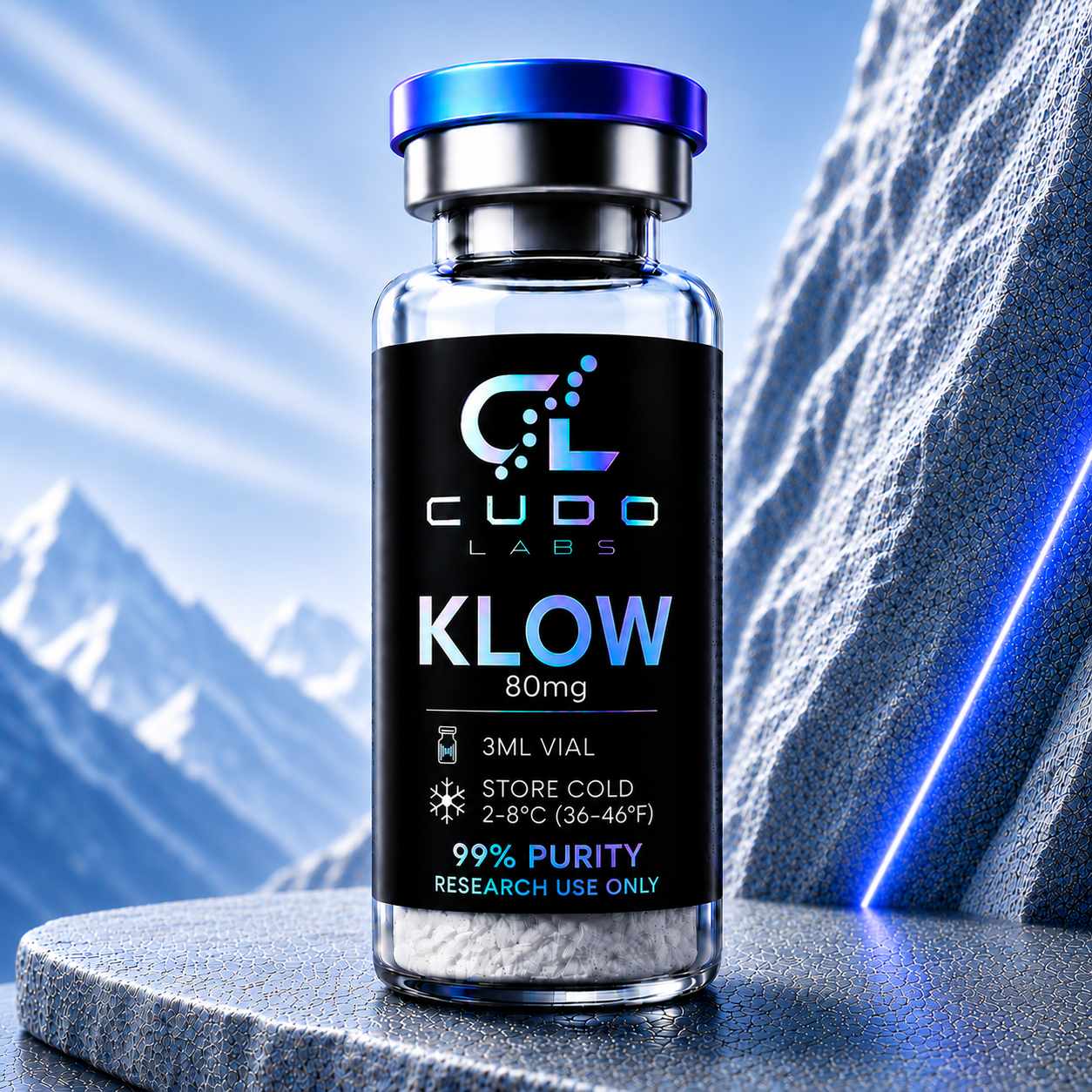
The Klow80mg – BPC 157 10mg + GHK-CU 50mg + TB500 10mg + KPV 10mg blend is a four-peptide regenerative formulation that combines complementary tissue-repair, anti-inflammatory, and matrix-remodeling compounds in a single lyophilized vial. Each component contributes a distinct mechanism: BPC-157 supports angiogenesis and cytoprotection, TB-500 (Thymosin Beta-4 fragment) drives cellular migration, GHK-Cu activates extracellular matrix synthesis and gene expression remodeling, and KPV (Lys-Pro-Val) — the C-terminal tripeptide of α-MSH — provides targeted anti-inflammatory activity at the gut and tissue level.
This 80MG total blend (BPC-157 10mg, TB-500 10mg, GHK-Cu 50mg, KPV-10 10mg) is designed for laboratory research investigating multi-target approaches to inflammation control, mucosal repair, and connective-tissue regeneration. The higher GHK-Cu loading reflects its role as the matrix-remodeling and gene-expression workhorse of the formulation, while KPV has attracted growing research attention for its modulation of NF-κB signaling and its emerging role in inflammatory bowel disease and skin inflammation models, complementing the systemic regenerative profile of the other three peptides.
By combining four well-characterized peptides into one formulation, researchers can study synergistic effects across the inflammation–migration–matrix synthesis cascade without managing multiple separate vials, supporting more reproducible experimental conditions.
Mechanism of Action
The four-peptide blend operates through parallel and convergent pathways that together cover the major stages of tissue response — early inflammation control, cellular recruitment, structural rebuilding, and resolution.
BPC-157 Pathways
BPC-157 promotes angiogenesis through VEGFR2 activation, modulates the nitric oxide system, upregulates growth factor expression (FGF, EGF, TGF-β), and exerts cytoprotective effects across gastrointestinal, musculoskeletal, and neural tissues. It also influences the gut–brain axis and supports vascular integrity at injury sites.
TB-500 Pathways
TB-500, a synthetic fragment of Thymosin Beta-4, regulates G-actin sequestration to enable cytoskeletal remodeling and cell migration. It activates the Akt and ILK survival pathways, recruits progenitor cells to damaged tissue, and supports endothelial differentiation contributing to neovascularization.
GHK-Cu Pathways
GHK-Cu (Glycyl-L-Histidyl-L-Lysine-Copper) stimulates collagen and elastin synthesis, activates decorin and glycosaminoglycan production, and modulates expression of thousands of genes — research by Pickart and colleagues has shown it shifts gene expression patterns toward those seen in younger tissue. The bound copper ion serves as a cofactor for lysyl oxidase, essential for collagen crosslinking.
KPV Pathways
KPV (Lys-Pro-Val) acts as the C-terminal tripeptide of α-melanocyte-stimulating hormone and retains many of α-MSH’s anti-inflammatory properties without significant melanocortin receptor activity. It downregulates NF-κB signaling, reduces pro-inflammatory cytokine production (TNF-α, IL-1β, IL-6), inhibits mast cell activation, and has demonstrated mucosal protective effects in colitis models. KPV also exhibits direct antimicrobial activity against several pathogenic organisms.
Synergistic Integration
Together, these four peptides address the complete repair cascade: KPV controls early inflammation, BPC-157 establishes vascular support and cytoprotection, TB-500 mobilizes cells into the site of repair, and GHK-Cu drives extracellular matrix synthesis and longer-term remodeling.
Research Findings
Each component of this blend is supported by a substantial independent research literature; the four-peptide combination itself has not been studied in large controlled trials, but the mechanistic rationale builds on well-documented pathways for each individual compound.
KPV Research Foundation
Studies published in journals including Gut, Inflammatory Bowel Diseases, and the Journal of Immunology have shown that KPV reduces inflammation in models of colitis, with research by Kannengiesser and colleagues demonstrating that oral nanoparticle delivery of KPV decreases inflammation in dextran sulfate sodium (DSS)-induced colitis models. Additional research has documented KPV’s ability to inhibit IL-1β-induced NF-κB activation in intestinal epithelial cells and its antimicrobial activity against Candida albicans and Staphylococcus aureus.
GHK-Cu Research Foundation
Research by Dr. Loren Pickart and colleagues established GHK-Cu’s role in wound healing and gene expression. Studies have shown GHK-Cu modulates over 4,000 human genes — with roughly half moving toward patterns seen in younger, healthier tissue — and stimulates collagen production by up to 70% in fibroblast cultures.
BPC-157 and TB-500 Research
BPC-157 has been studied across hundreds of preclinical publications by Sikiric and colleagues, demonstrating effects on tendon, ligament, gastrointestinal, and neural tissue repair. TB-500/Thymosin Beta-4 research published in Nature and other journals has documented its role in cardiac repair, corneal healing, and stem cell recruitment.
Combination Rationale
While controlled studies of this specific four-peptide combination are not available, the inclusion of KPV alongside the established BPC-157 / TB-500 / GHK-Cu triple blend extends the formulation’s coverage of inflammatory pathways, particularly for research models involving mucosal or sustained inflammatory components.
Research Applications
- Comprehensive tissue regeneration research
- Mucosal and gastrointestinal inflammation studies
- Wound healing and connective tissue repair research
- Anti-inflammatory pathway (NF-κB) modulation studies
- Skin remodeling and dermatological research
- Collagen and extracellular matrix studies
- Musculoskeletal injury healing research
- Cytokine modulation and immunology research
- Antimicrobial peptide research (KPV component)
- Multi-target peptide synergy investigations
Safety Profile
The safety profile of this four-peptide blend is informed by the individual safety data for each component. BPC-157 and TB-500 have shown excellent tolerability across extensive preclinical studies. GHK-Cu has the longest human safety record of the four, with decades of use in cosmetic and wound-healing applications. KPV has been investigated in inflammatory bowel disease research with no significant safety signals reported in published studies, including oral and parenteral administration in animal models.
Combination Considerations
Comprehensive safety data for this specific four-peptide combination in humans is not available. As with any peptide blend, theoretical considerations regarding cell proliferation, immune modulation, and angiogenic effects should be considered. Research handling should follow standard laboratory protocols for sterile lyophilized peptides.